Qigong (气功, “chee-gung”) is a traditional Chinese mind–body practice that brings together gentle movement and posture, slow breathing and calm, focused attention. The name means “energy work” — cultivating qi, the breath and vital energy. Practiced in China for more than 2,000 years, it is done today by people of every age around the world for overall well-being, energy and inner balance.
| Name | Qigong (气功) — qi “breath, energy” + gong “work, skill” |
|---|---|
| Origin | China — breathing and movement exercises documented since at least 168 BC |
| Three elements | Regulating the body (posture & movement), the breath and the mind |
| Forms | Moving (dynamic) and still (meditative) — hundreds of styles |
| Well-known sets | Five Animal Frolics, Eight Brocades (Baduanjin), Muscle–Tendon Change (Yijinjing) |
| Who can practice | Adults of any age and fitness — many exercises can be done standing or seated |
| Celebrated | World Tai Chi & Qigong Day — the last Saturday of April, in 80+ countries |
What is Qigong?
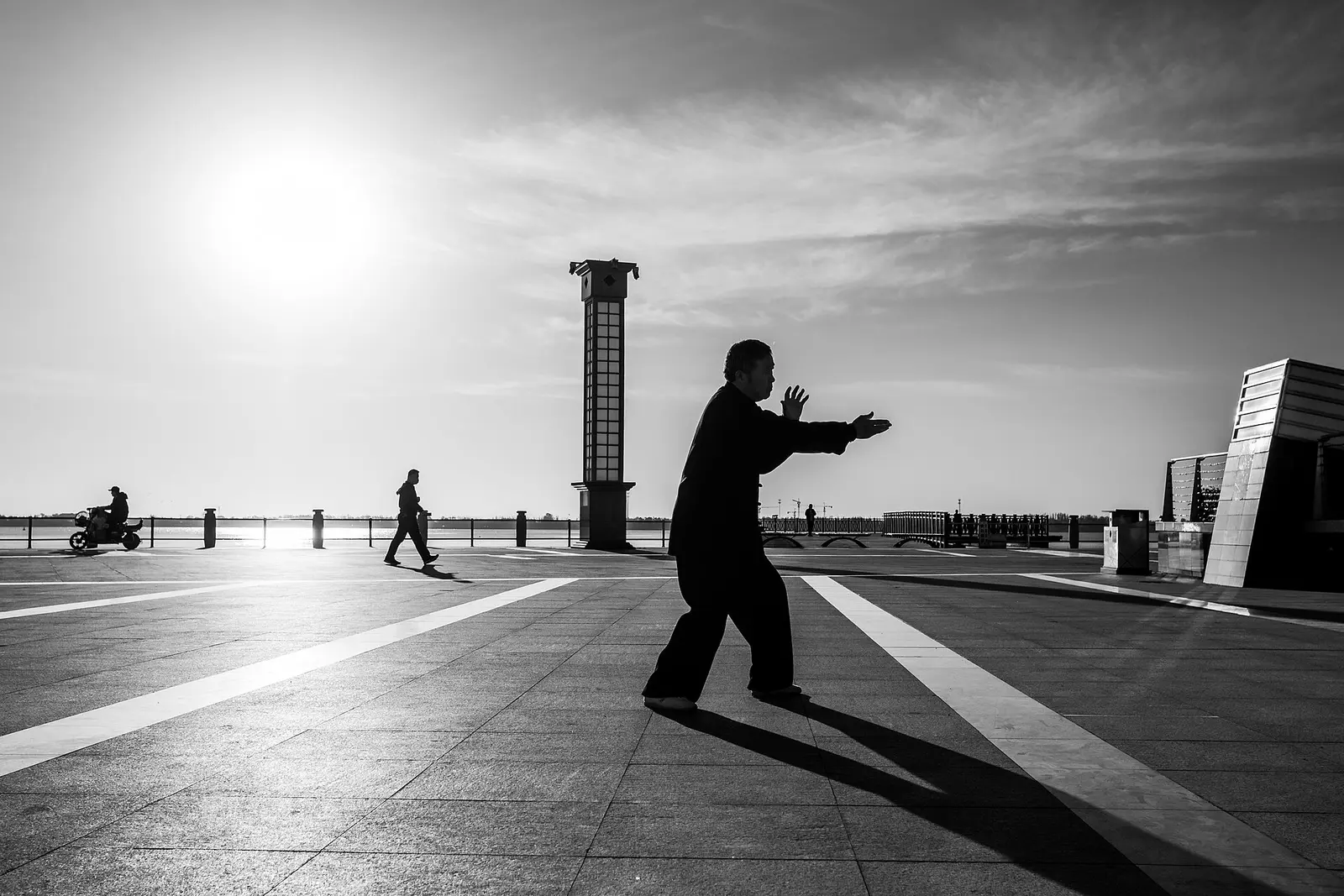
The word Qigong joins two Chinese characters. Qi (气) means breath, air and, more widely, the vital energy that animates every living thing. Gong (功) means work, effort, or a skill that grows through patient practice — the same “gong” as in kung fu. Qigong, then, is the skill of working with your breath and your energy.
In practice, it looks simple: slow, flowing movements, quiet standing postures, soft and deep breathing, and attention gently resting in the body. There is no competition, no strain and no special equipment. Yet behind that simplicity is a refined tradition that has been studied, taught and passed from teacher to student for centuries.
Body, breath and mind — practiced together
Every form of Qigong works with three things you always carry with you. Traditional teachers call them the three regulations:
Body
Relaxed, upright posture and slow, smooth movement that opens the joints and releases tension.
Breath
Slow, long and deep breathing that settles into the lower abdomen and calms the whole system.
Mind
Calm, focused attention. “Where the mind goes, qi follows” — awareness gathers and guides energy.
When the three come together, the practice becomes more than exercise: a quiet state where body and mind feel unified, relaxed and awake at the same time.
Why practice Qigong?
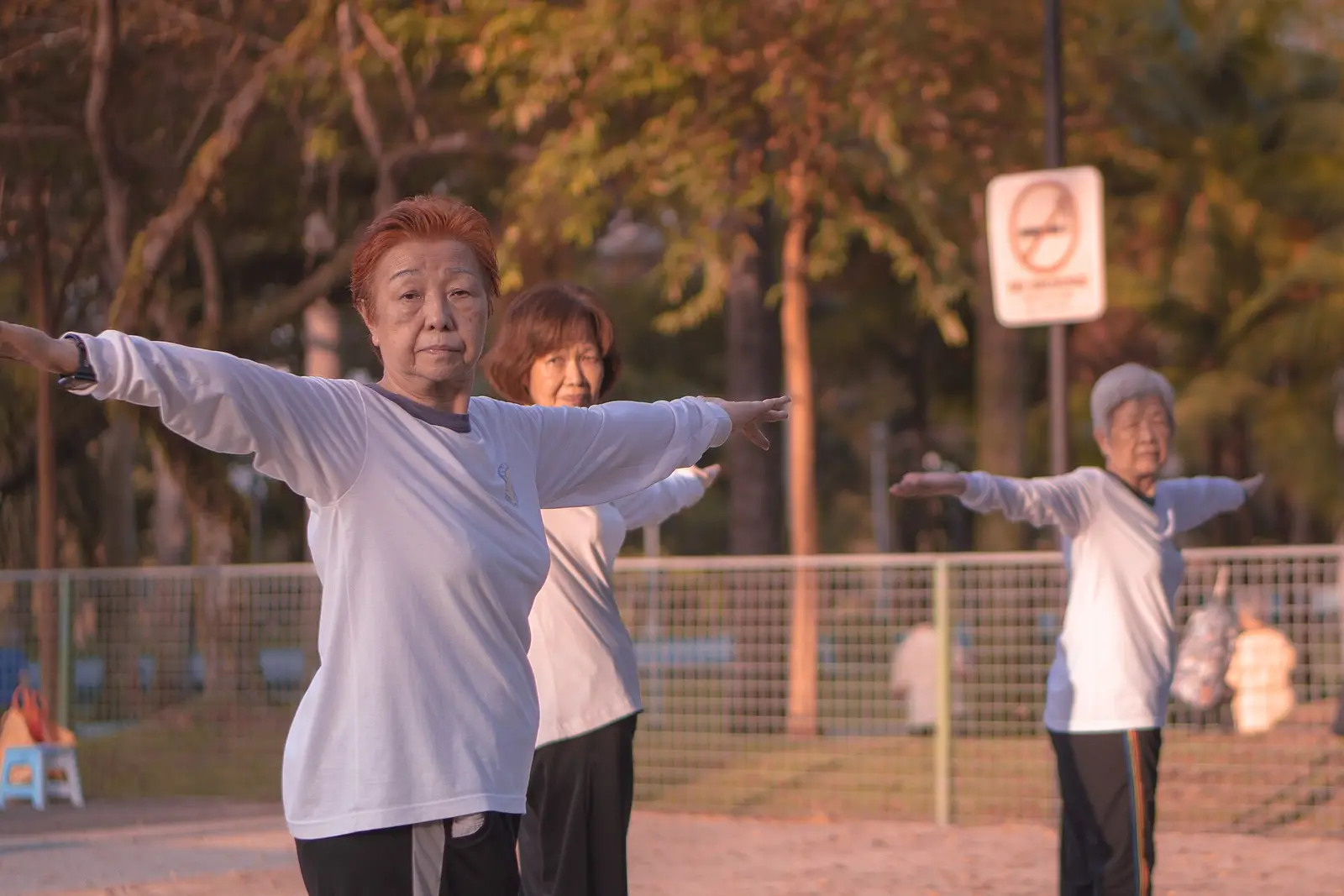
Modern life asks a lot of us — long hours of sitting, constant screens, a mind that rarely rests. Qigong offers a gentle counterbalance that fits into an ordinary day:
- It is gentle. No strength, flexibility or athletic background is needed, and movements adapt to your body and age.
- It takes little time. Ten to twenty minutes a day is a real practice — consistency matters more than length.
- It works anywhere. At home, in a park, in a studio or online — no mat or equipment required.
- It lasts a lifetime. Beginners can start on day one, and there is always more depth to explore.
- It makes you an active participant in your own well-being, instead of waiting for change to come from outside.
The benefits of Qigong
Every body is different, and change grows with regular practice. These are the benefits people describe most often:
More energy
Feeling more awake, clear and resourced through the day — instead of running on empty.
Calm & balanced mood
Slow breathing and quiet attention settle a busy mind and help mood feel steadier.
Better sleep pattern
Releasing the day’s tension makes winding down easier, and sleep can become more regular.
Lighter, more flexible body
Gentle movement softens stiffness and supports posture, balance and a feeling of rejuvenation.
Body awareness
Learning to listen to your body again — noticing tension early and letting it go.
Breath you can rely on
Simple breathing techniques you can use anywhere to calm down and gather yourself.
Qigong supports overall well-being. It is not medical treatment and doesn’t replace your doctor’s advice.
A short history of Qigong
Qigong did not appear all at once. It grew over more than two thousand years from many streams — Daoist practices for long life, Buddhist meditation, Confucian self-cultivation, the martial arts and traditional Chinese medicine.
-
4th century BC
Daoyin — “guiding and pulling”
Ancient Chinese texts already describe people who “exhale the old and inhale the new” and stretch like bears and birds to nourish life. These daoyin exercises — guiding the breath, pulling and stretching the body — are the earliest roots of Qigong.
-
168 BC
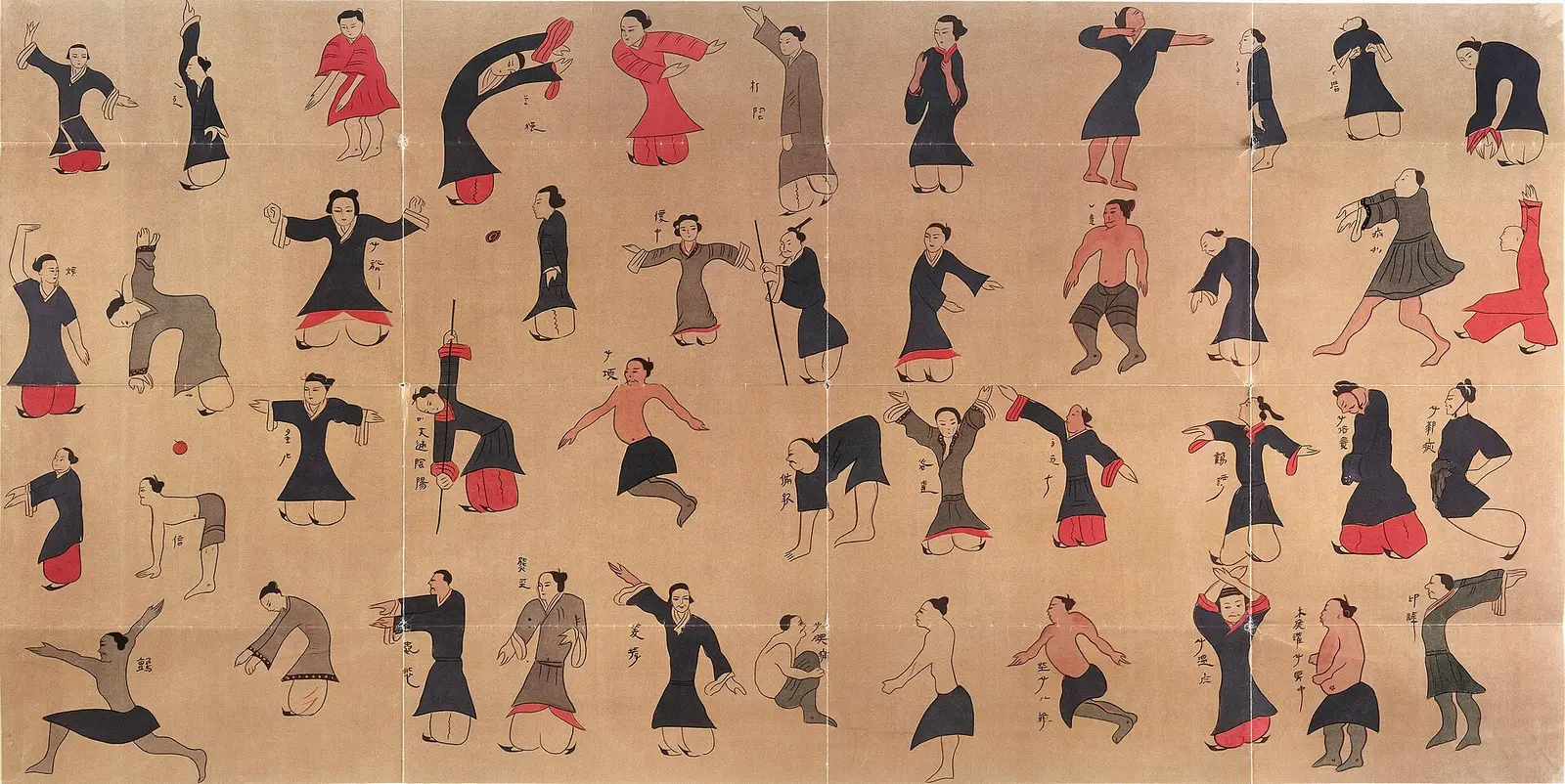
The Daoyin Tu of Mawangdui
In 1973, archaeologists opening tomb no. 3 at Mawangdui, in Hunan province, found a silk painting of 44 men and women performing exercises — some imitating animals, some breathing in stillness. Buried in 168 BC, it is one of the oldest illustrated exercise charts in the world.
-
2nd century AD
Hua Tuo and the Five Animal Frolics
The celebrated physician Hua Tuo (141–208) is credited with the Wuqinxi, or Five Animal Frolics: movements inspired by the tiger, deer, bear, ape and bird, practiced to keep the body supple and strong.
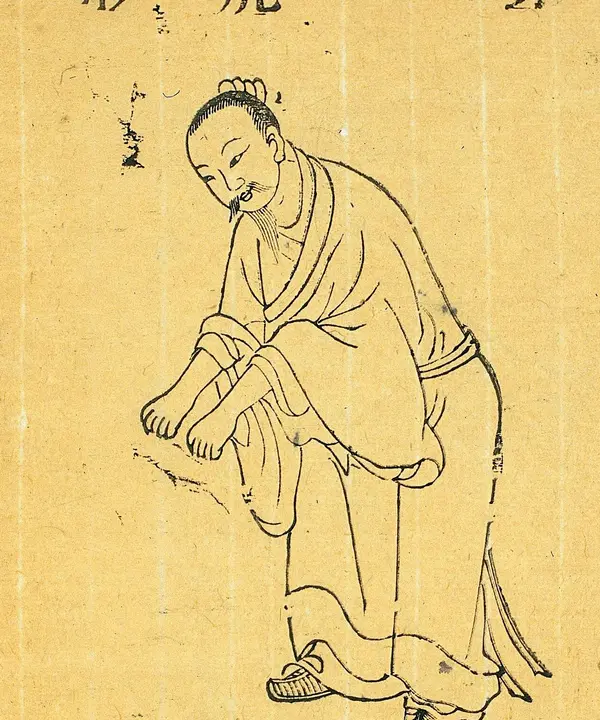 Tiger
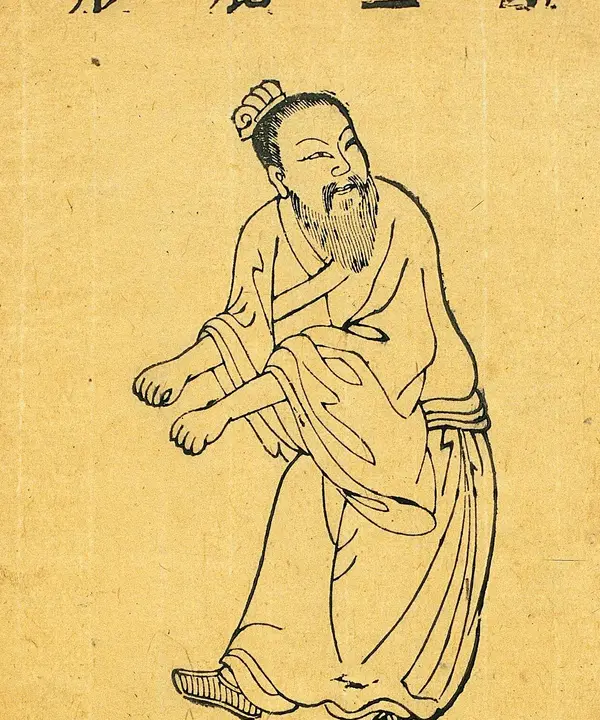 Deer
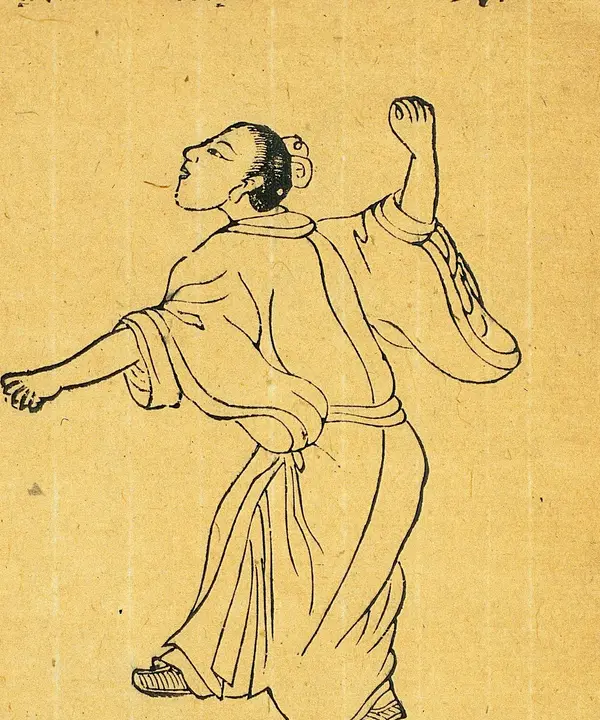 Bear
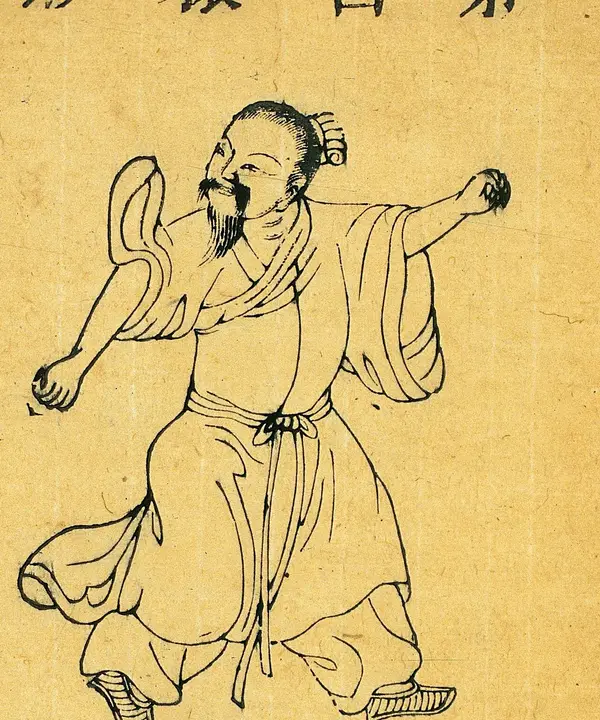 Ape
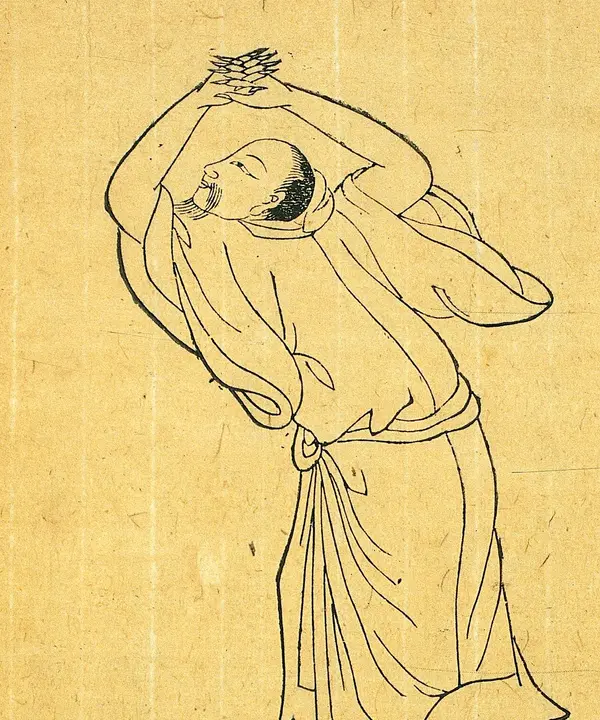 Bird
Chinese woodcuts of the Play of the Five Creatures. Wellcome Collection · CC BY 4.0
-
Centuries of cultivation
Daoist, Buddhist and martial streams
Over the following centuries, Daoist hermits refined breathing and meditation for long life, Buddhist monasteries added their own methods of stillness, and martial artists developed exercises to strengthen the body from within — such as the Yijinjing, traditionally linked to the Shaolin Temple.
-
c. 1150 AD
The Eight Brocades
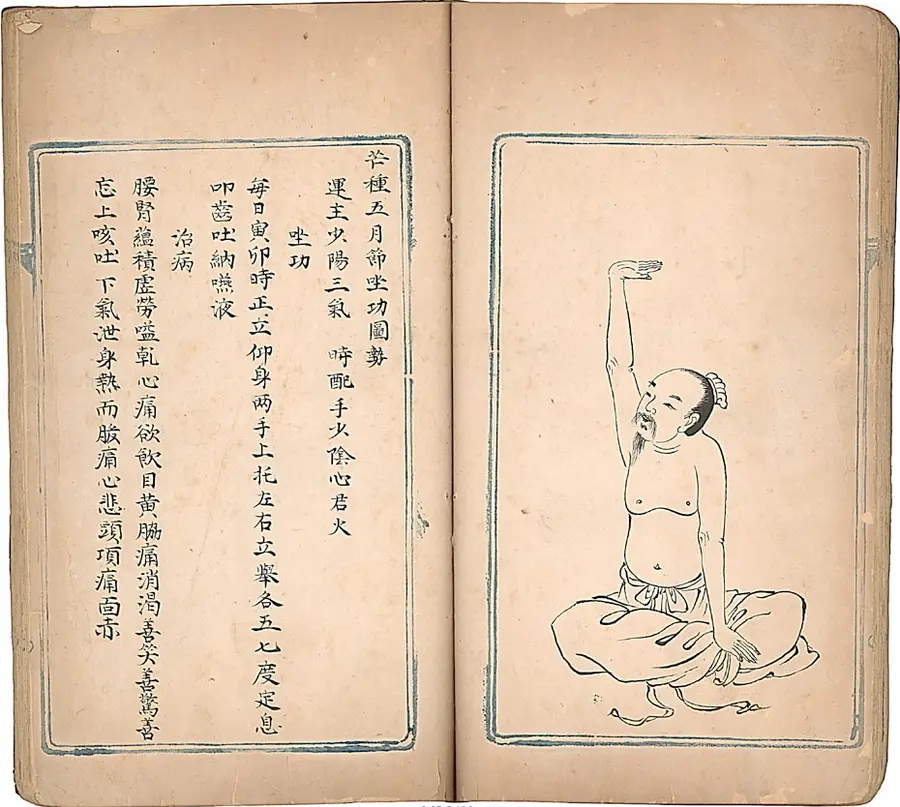
The Baduanjin — eight movements “as precious as silk brocade” — is described in Song-dynasty writings of the 12th century. Short, gentle and easy to remember, it is still one of the most widely practiced Qigong sets today.
-
1950s
One name for many practices
The word qigong came into wide use in the late 1940s and 1950s as an umbrella name for China’s many breathing, movement and meditation exercises. Liu Guizhen’s 1957 book was the first widely published book on qigong.
-
Today
A practice for the whole world
From the 1980s, Qigong spread far beyond China. Today it is practiced in parks, studios and living rooms on every continent — and online — and each year World Tai Chi & Qigong Day brings people together in more than 80 countries.
Many styles, one root
There are hundreds of Qigong styles, but they share the same foundation of body, breath and mind. Broadly, they fall into two groups:
Moving Qigong
Flowing sequences of whole-body movement coordinated with the breath — like the Five Animal Frolics or the Eight Brocades.
Still Qigong
Standing, sitting or lying postures held quietly while working with the breath and attention — almost no outward movement.
Tai chi, which began as a martial art, is a close relative: when practiced for health it is considered one form of Qigong.
Learning Qigong with Iurii

Master Iurii Khomiakov has practiced and taught Qigong for more than 20 years. He teaches it the way it is meant to be learned: from the beginning, step by step, with patience. Beginners first learn how to properly enter the practice — relaxing and awakening the body — before expecting to feel energy.
Where: online classes for students worldwide, and in-person sessions in Florida and Cooperstown, New York.
Ask about classesFrequently asked questions
What does the word Qigong mean?
Qigong (气功, pronounced “chee-gung”) joins two Chinese words: qi — breath, vital energy — and gong — work, skill cultivated over time. Together they mean “energy work” or “the skill of working with your breath and energy.”
How old is Qigong?
Breathing and movement exercises of this kind are more than 2,000 years old. The Daoyin Tu, a silk painting of 44 people doing exercises, was buried in a tomb at Mawangdui, China, in 168 BC. The umbrella word “qigong” itself became widely used in the 1950s.
Is Qigong the same as tai chi?
They are close relatives. Tai chi began as a martial art; when it is practiced for health it is considered one form of qigong. Qigong is the wider family — hundreds of styles, many of them simpler and quicker to learn than a full tai chi form.
Do I need to be fit or flexible to practice Qigong?
No. Qigong movements are slow and gentle and can be adapted to any age, body and fitness level — many exercises can even be done seated. What matters is relaxed, regular practice.
How often should I practice Qigong?
A little every day works better than a long session once in a while. Many people begin with 10–20 minutes a day and build from there with a teacher’s guidance.